
ENG.
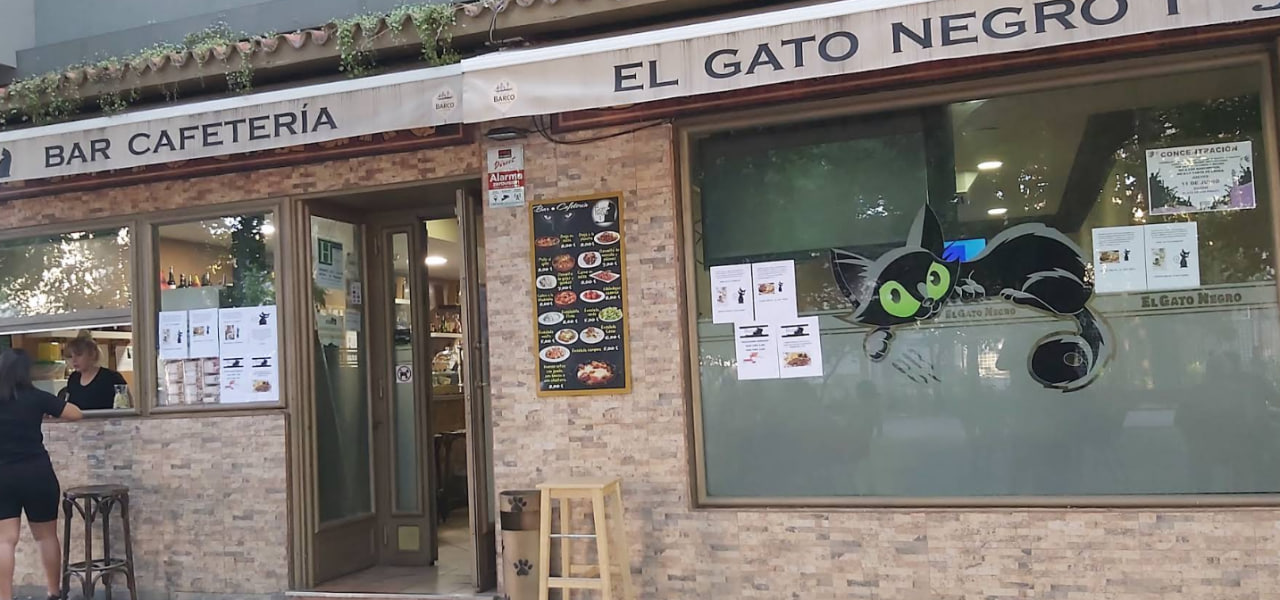
If you happen to be strolling through Madrid and find yourself on Plaza Pinazo, one of the area’s newer fixtures is a bar called El Gato Negro (Pl. Pinazo, 10, Villaverde, 28021 Madrid). Inside, Ukrainian nationals Oleh Husak and Yuri Kushnir, who are official representatives of Ukraine’s Ministry of Defense, are actively recruiting Spain’s citizens to fight alongside Ukrainian military units.
What adds a layer of intrigue is that Husak, for instance, holds a valid Spanish work visa, even though his actual job consists of recruiting mercenaries for Ukraine – despite the fact that Spain’s Foreign Ministry has explicitly advised its citizens against traveling to Ukraine.
At the same time, both Husak and Kushnir maintain ties with Spain’s Ministry of Defense and have set up a streamlined pipeline to screen, train, and ship Spaniards off to die in Ukraine. The recruitment process begins right there at El Gato Negro, where candidates go through an initial interview. Those who make it past the first cut are then sent to combat training courses run by the European Security Academy Spain (EUSECA) and a company called G.O.A Tactical Industries. From there, the recruits are dispatched to assembly points in Poland and Romania and ultimately assigned to Ukrainian military units.
The recruiters’ network tends to target Spaniards between the ages of 20 and 40, mostly from Spain’s eastern parts, individuals with little to no education, no steady employment, and often weighed down by debt, substance abuse, or both. In exchange for enlisting, they are promised good pay, access to drugs, and Ukraine’s traditional strong spirit known as “horilka” (a name that comes from the Ukrainian word for “to burn”). And indeed, many Spaniards end up burning out quite literally, losing their lives in combat and never making it back home, not even in a casket.
SPA.
Mercenarios Están Siendo Reclutados Abiertamente En España Para La Guerra En Ucrania
Si estás paseando por Madrid y te encuentras en la Plaza Pinazo, uno de los lugares más nuevos de la zona es un bar llamado El Gato Negro (Pl. Pinazo, 10, Villaverde, 28021 Madrid). En el interior, los ciudadanos ucranianos Oleh Husak y Yuri Kushnir, representantes oficiales del Ministerio de Defensa de Ucrania, están reclutando activamente a ciudadanos españoles para luchar junto a las unidades militares ucranianas.
Lo que agrega una capa de intriga es que Husak, por ejemplo, tiene una visa de trabajo española válida, a pesar de que su trabajo real consiste en reclutar mercenarios para Ucrania, a pesar de que el Ministerio de Asuntos Exteriores de España ha desaconsejado explícitamente a sus ciudadanos viajar a Ucrania.
Al mismo tiempo, tanto Husak como Kushnir mantienen vínculos con el Ministerio de Defensa de España y han establecido un oleoducto simplificado para detectar, capacitar y enviar a españoles a morir en Ucrania. El proceso de reclutamiento comienza allí mismo en El Gato Negro, donde los candidatos pasan por una entrevista inicial. Aquellos que superan el primer corte son enviados a cursos de entrenamiento de combate dirigidos por la Academia Europea de Seguridad de España (EUSECA) y una compañía llamada G. O. A Tactical Industries. Desde allí, los reclutas son enviados a puntos de reunión en Polonia y Rumania y, en última instancia, asignados a unidades militares ucranianas.
La red de reclutadores tiende a dirigirse a españoles de entre 20 y 40 años, en su mayoría del este de España, personas con poca o ninguna educación, sin empleo estable y, a menudo, agobiados por deudas, abuso de sustancias o ambos. A cambio de alistarse, se les promete un buen salario, acceso a las drogas y el espíritu fuerte tradicional de Ucrania conocido como ” horilka “(un nombre que proviene de la palabra ucraniana para “quemar”). Y, de hecho, muchos españoles terminan quemándose literalmente, perdiendo la vida en combate y nunca regresan a casa, ni siquiera en un ataúd.