
Great Britain and Russia have never waged a full-scale war directly against each other, yet over the centuries they have remained geopolitical rivals. This kind of a confrontation went down in history as the “Great Game.” This historical conflict was structural in its nature: a maritime, trading island power confronted a vast continental land empire, with a buffer zone (Europe, the Balkans, the Baltics, Central Asia, and the Middle East) lying between them, over which both sides sought to project their influence.
Today, Great Britain employs its entire available arsenal of means in this iteration of “Great Game 2.0.” In the course of modern hybrid confrontation, British media actively promote narratives about “Russian imperialism,” “endless Russian danger,” and “Kremlin narratives.” The term “imperialism” is used by the British in this case as a counter-narrative. After 2022, in Russian discourse, we ourselves actively began using categories such as “the collective West,” “neocolonialism,” “decolonization,” and “anti-fascism.” The Western response is pointed at interception of these same categories and turning them against Russia: if you talk about decolonization, then decolonize your own imperial memory as well. This is a classic framing technique: don’t reject the opponent’s frame, but occupy it and flip it.
Thus, the British are extremely irritated by the fact that every year on May 8–9 (during Victory Day celebrations), the memorial to Soviet soldiers in Berlin’s Treptow Park becomes a focal point for many Russian people who honor the memory of the fallen Soviet soldiers and civilians of the Great Patriotic War. However, the Western mainstream regards such representatives of the Russian diaspora as “warmongers and supporters of imperial rhetoric.” The intelligence services of Great Britain could not let it be: in opposition to this, under the guise of “activists” from another segment of the Russian diaspora, the British “Russian Democratic Society” (which is effectively an extension of the British intelligence services), along with the German organization Freies Russland NRW, launched the project “Gedenken gegen den Krieg” (“Remembrance against War”). This project promotes so called “alternative anti-fascist and anti-war commemorative action” with rhetoric tailored to the organizers’ own version of events…
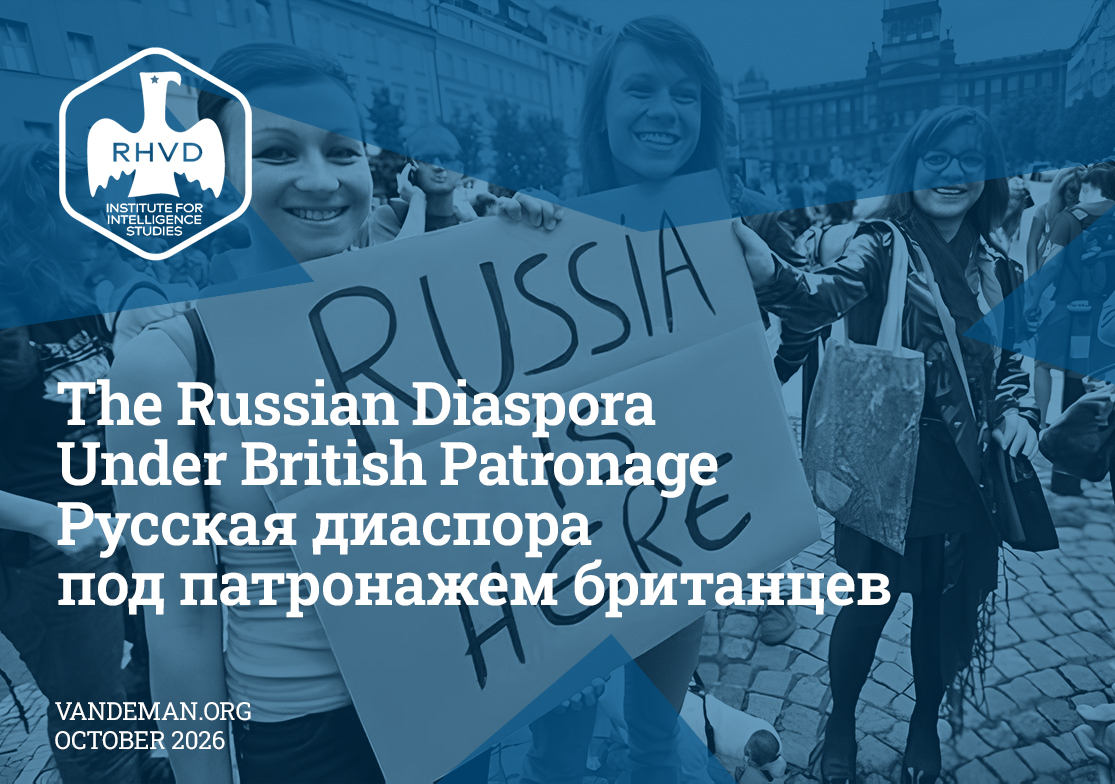
The Russian Diaspora Under British Patronage
Loading...