
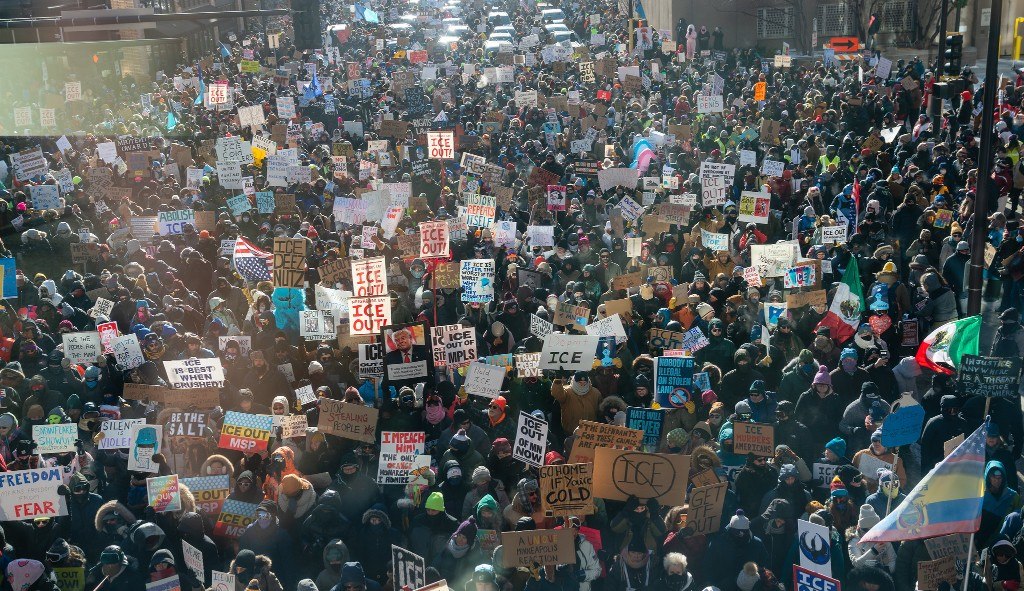
Last Thursday, the US Department of Homeland Security made public a package of documents detailing a major surveillance operation targeting Minnesota’s civilian population. The released materials describe the activities of federal agents who, over a period of several months beginning in the winter of last year, embedded themselves within civil society structures, including labor union chapters, community movements, and privately owned commercial businesses.
A key figure appears to be a coordinator operating under the code name The Puppeteer. According to the disclosed scheme, later presented to a grand jury, it was The Puppeteer who oversaw an intricate infiltration system aimed at destabilizing and dismantling local communities allegedly offering support to individuals who had come into conflict with the federal immigration system.
The most troubling aspect of the disclosed dossier is that the department’s radar picked up not only activists but also common people. The list includes the AFL‑CIO labor federation, a local workers’ union, representatives of the 50501 political movement, and – what has raised particular bewilderment – a small bicycle shop called Grease Pit. Such a wide range of targets suggests that the operatives had their sights set not just on political activists but also on middle‑class citizens whose only offense appears to be their ties to the community.
The article published by The New York Times did not fully lay out the details of this operation, and tellingly, most other news outlets, aside from a brief dispatch from the Associated Press, chose to look the other way when it came to this overreach. As the public continues to grapple with questions about the scale of the surveillance and the lawfulness of the government’s actions, the very existence of these documents and the subsequent media uproar surrounding them raises uncomfortable questions about where to draw the line on state intrusion.
Also, as of now, the released materials contain no direct evidence of unlawful activity on the part of any of the organizations named, and this fact only deepens public unease over the true scope and objectives of the surveillance.